Eating crocodile in Puerto Princesa
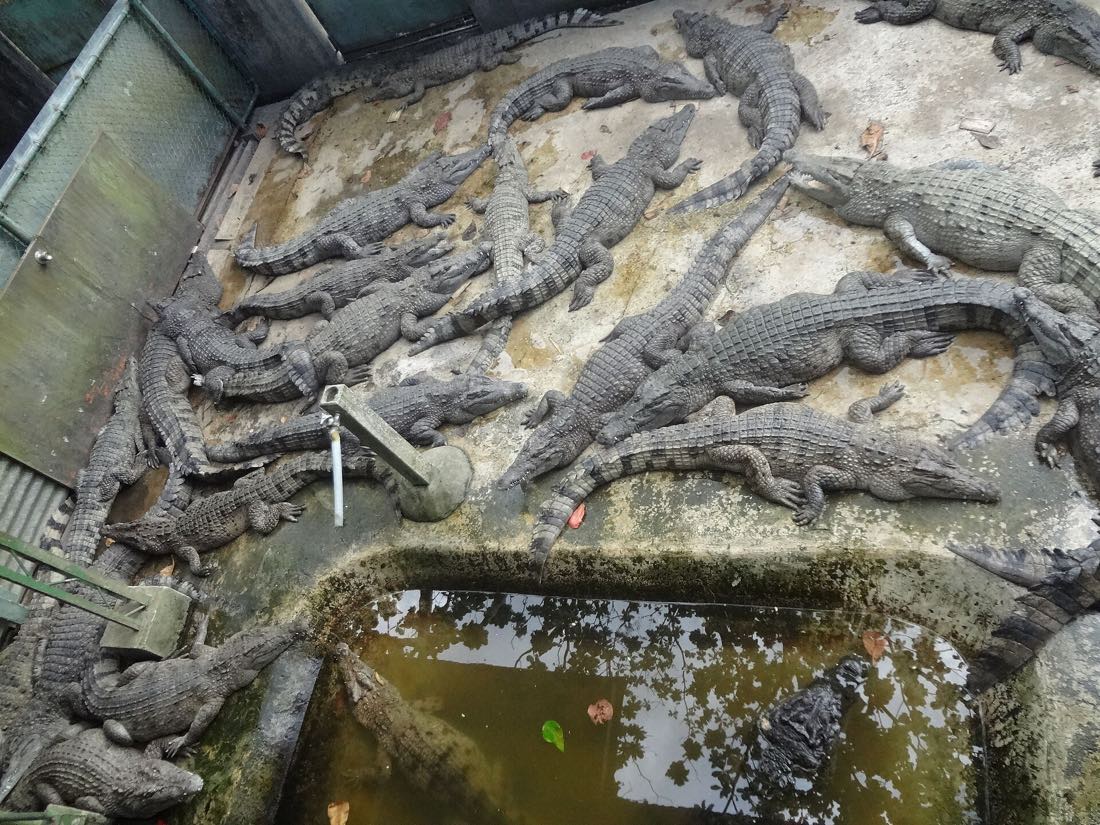
The crocodile on the menu here is farmed at the same government facility tourists visit. That is the Palawan Wildlife Rescue and Conservation Center, established 1987 and run by the DENR, which breeds the critically endangered Philippine crocodile as a conservation programme and also keeps saltwater crocodiles. Sizzling chopped crocodile sisig runs ₱350–600 (~$6–10) and Kinabuchs is the place; it tastes like firmer chicken, somewhere between chicken and pork. It is not wild-caught, it is not an endangered animal on your plate, and it is also completely fine to skip.
The farm and the restaurant are the same story
This is the fact that decides it for most people, in whichever direction they were already leaning. The crocodile is farmed, by the government, at a place on the standard tourist circuit.
The Palawan Wildlife Rescue and Conservation Center in Irawan was established in 1987 and is run by the Department of Environment and Natural Resources. Its headline work is breeding the critically endangered Philippine crocodile, Crocodylus mindorensis; it also holds and breeds saltwater crocodiles, which are not endangered, and it is farmed meat from that side of the operation that reaches restaurants. Entry is somewhere between free and about ₱50 depending on which source you believe, it opens 08:00–17:00, and it carries 575 TripAdvisor reviews — full detail on the farm page.
So the honest framing is: eating this is not poaching, and it is not eating an endangered species. It is eating a farmed reptile from a facility whose conservation programme is real and whose enclosures are small. Both halves of that sentence are true and neither one cancels the other.
The meat itself is unremarkable in the best way. Chopped, sizzled with onion and chilli as sisig, it eats like a firmer chicken with a slightly denser bite — most people describe it as sitting between chicken and pork. Nobody eats it twice for the flavour. It is a novelty that happens to eat well, which is a fair description of the whole category.
Every way it is served here, priced
There are three preparations in practice and one of them is clearly the right introduction. All of them are at Kinabuchs, which opens 16:00–17:00 and does not serve lunch.
| Dish | What it is | Price | Verdict |
|---|---|---|---|
| Crocodile sisig the standard order and the best one | Chopped crocodile sizzled with onion, chilli and calamansi on a hot plate — the format that makes any meat work | ₱350–600 | WORTH IT |
| Crocodile adobo | Braised in vinegar, soy and garlic. Fine, and the sauce does most of the talking | ₱350–600 | DEPENDS |
| Crocodile steak | The version that shows you what the meat actually is. Lean, firm, and easy to overcook | ₱350–600 | DEPENDS |
| Crocodile sisig at a tour-stop restaurant | Sold along the city-tour circuit near the farm. Convenient, more expensive, smaller portion | unverified | SKIP |
| Not eating it the option this page exists to make easy | Tamilok, crispy pata, grilled pampano and lato make a full Kinabuchs night with none of the questions | ₱350–600 a head | WORTH IT |
Prices are 2026 figures for Kinabuchs. Crocodile is not on the menu at KaLui or Badjao — this is a one-restaurant dish in practice.
The parts that sit uncomfortably, stated plainly
This site flags the judgement calls instead of making them for you: the crocodile farm is a genuine government breeding and rescue facility with small enclosures and a baby-crocodile photo op you can decline; the Butterfly Garden's Palaw'an demonstrations are paid, consensual and income-generating but read as zoo-adjacent to some visitors; and at Iwahig, inmates perform for tips. Buy the handicrafts, ask before photographing anyone, and skip anything that sits wrong with you.
Applied to this dish specifically: the breeding programme for the Philippine crocodile is genuine conservation work and the species is critically endangered in the wild. The saltwater crocodiles farmed for meat and leather are a different animal and a different question — a commercial operation attached to a conservation one, which is a common arrangement in South-East Asia and an uncomfortable one to look at directly. The enclosures at the centre are small. Visitors say so in the reviews, and they are right.
None of that makes eating it wrong, and none of it makes eating it obviously fine. What it does mean is that you should decide before you are sitting in front of a menu with a table watching. If the answer is no, say so once and order the crispy pata — nobody in Puerto Princesa will think twice about it, and the rest of that menu is genuinely the best exotic-free food in the city.
One more thing worth knowing: seeing the farm first changes how the meal lands, and it changes it in both directions. Some people come out and order the sisig that evening. Some come out and never mention it again. Either is a reasonable reaction to the same 30-minute visit.
The farm behind the dish
Should you order it?
The farm and the restaurant
There is no crocodile-tasting product and there does not need to be: the farm is a ₱600–900 city-tour stop and the sisig is a walk-in dish at one restaurant.
Crocodile meat questions, answered
Where can you eat crocodile in Puerto Princesa?
Kinabuchs on Rizal Avenue, at the Bancao-Bancao end, which serves crocodile sisig at ₱350–600 along with croc adobo and steak. It opens 16:00–17:00 and does not do lunch. Neither KaLui nor Badjao carries crocodile, so in practice this is a one-restaurant dish.
Is the crocodile meat in Palawan farmed or wild?
Farmed, at the Palawan Wildlife Rescue and Conservation Center in Irawan — the DENR facility established in 1987 that tourists visit on the half-day city tour. The meat comes from saltwater crocodiles; the critically endangered Philippine crocodile is bred there for conservation, not for eating.
What does crocodile taste like?
Like a firmer chicken, somewhere between chicken and pork, with a denser bite. As sisig — chopped and sizzled with onion and chilli — it is genuinely good eating. As a steak it is lean and easy to overcook. Either way it costs ₱350–600 and nobody orders it twice for the flavour.
Is it ethical to eat crocodile in Puerto Princesa?
There is no clean answer and this site will not pretend otherwise. It is farmed rather than poached and it is not an endangered species, but the commercial operation is attached to a conservation facility whose small enclosures draw regular criticism across its 575 reviews. Decide before you sit down.
Is crocodile sisig expensive?
₱350–600 a plate, which is the most expensive single dish at Kinabuchs and still under $10. A full evening there with crocodile, tamilok at ₱150–300, a vegetable side and beers at ₱60–90 lands at ₱350–900 a head.
What should I order instead if I do not want crocodile?
At the same table: crispy pata, which reviewers here specifically call not greasy, grilled pampano, fried shrimp and lato at ₱50–100. That is a complete Kinabuchs dinner for ₱350–600 a head with none of the ethical questions attached.
Can you visit the crocodile farm and eat crocodile the same day?
Yes, and it is the standard sequence. The farm opens 08:00–17:00 and sits on the half-day city tour at ₱600–900 with a local operator; Kinabuchs opens at 16:00–17:00 a short tricycle ride away. Seeing the animals first genuinely changes the meal, in both directions.
Continue planning
Eat it with a local
Puerto Princesa food tours & tastings — guided street-food crawls and cooking classes with vetted operators, most with free cancellation.