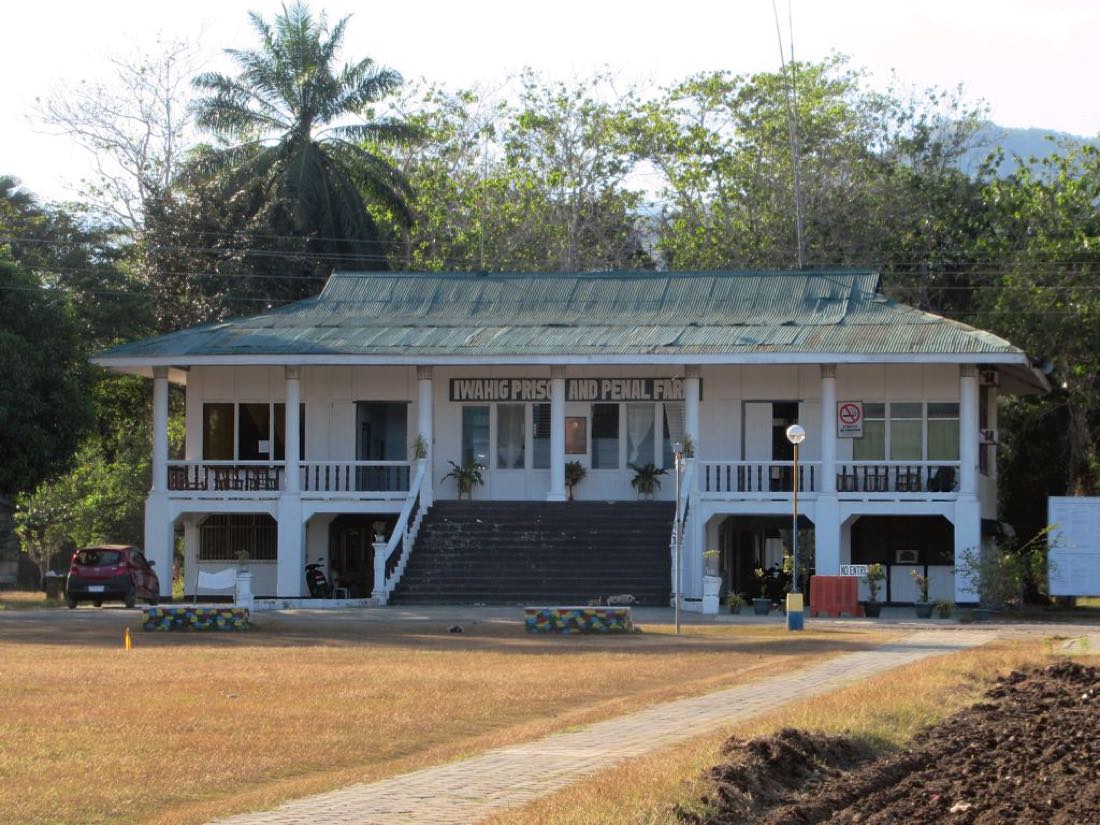
Iwahig Prison and Penal Farm: can you still visit?
Yes, you can visit, and whether you should is a judgement you have to make yourself. Iwahig is the open-air prison without walls, established in 1904 and about 30 to 45 minutes south of the city. TripAdvisor reviews running through 2023 and 2024 confirm active visiting — an inmate band, a handicraft shop where the money goes to the makers, and conversations with minimum-security colonists in orange shirts. Entry is free; you sign in at the gate with photo ID and performances expect tips. It holds 3.9/5 from 220 reviews. Access is to the minimum-security zone only, and BuCor policy can change without notice.
A prison with no perimeter, and 26,000 hectares of farm
Iwahig is not a museum and it is not a heritage site. It is a working penal colony, and everyone you meet there is serving a sentence.
The colony was established in 1904 under the American administration as a rehabilitation-through-agriculture model, and it still works that way. Minimum-security inmates — called colonists, identified by orange shirts — farm rice, coconut and livestock across a reservation that has no perimeter wall around the areas visitors see. Some live with their families inside the reserve. It is one of the genuinely unusual things in the Philippines and it does not resemble any prison most visitors have a mental picture of.
What a visit consists of: signing in at the gate with photo identification, a walk around the administrative area and farm operations, the souvenir shop selling carvings, bags and trinkets made by inmates, and — if a group has been arranged or one forms — the inmate band and dance performances. Reviewers consistently describe the colonists as the ones who start the conversations.
Entry itself is free. The performances are given for tips and donations, and buying from the handicraft shop is the point rather than the gift shop tax: the proceeds go to the men who made the items. If you go, go with cash and spend some of it.
The question you should actually ask
This site flags the judgement calls instead of making them for you: the crocodile farm is a genuine government breeding and rescue facility with small enclosures and a baby-crocodile photo op you can decline; the Butterfly Garden's Palaw'an demonstrations are paid, consensual and income-generating but read as zoo-adjacent to some visitors; and at Iwahig, inmates perform for tips. Buy the handicrafts, ask before photographing anyone, and skip anything that sits wrong with you.
Reasonable people land in different places on this one. The case for going: Iwahig is an internationally studied rehabilitation model, the handicraft income is real, the colonists are not compelled to interact, and visitors leaving money in the shop is one of the few economic channels available to the men inside. The case against: inmates performing for tourists in exchange for tips is a power relationship whatever the framing, and if the idea of it makes you uncomfortable, that discomfort is a reasonable signal rather than squeamishness.
The practical version of the ethical position, if you decide to go: buy the handicrafts, tip the band properly, ask before you photograph anybody, do not photograph anyone who has not agreed, and do not treat the visit as a spectacle. Nothing about this place is a set.
It is worth knowing what you are not being shown. Access is to the minimum-security zone only. The coastal ground where the eleven survivors of the Palawan Massacre came ashore in December 1944 sits inside today's maximum-security area and is off limits, as a February 2024 reviewer found. Do not turn up expecting to walk it.
What you can and cannot see
Iwahig has no ticket office, no published opening hours and no itinerary. This is what reviewers through 2023 and 2024 consistently describe.
| What | Cost | Notes | Verdict |
|---|---|---|---|
| The handicraft shop carvings, bags, trinkets made by inmates | whatever you spend | Proceeds go to the makers. This is the single best reason to come and the easiest thing to get right | WORTH IT |
| Signing in and walking the colony administrative area and farm operations | free | Photo ID at the gate. No perimeter wall in the areas visitors see | WORTH IT |
| The inmate band and dancing arranged for groups, tips expected | tips and donations | The part people find either moving or uncomfortable. Both reactions are common in the review record | DEPENDS |
| Balsahan River swimming area inside the reserve | small fee, unverified ~₱20–50 | A river pool used by locals. Nobody publishes the fee — bring small notes | DEPENDS |
| The maximum-security zone including the massacre escape coast | — | Off limits. Flagged by a February 2024 reviewer who tried | SKIP |
| An organised tour of the prison sold as a product | — | Does not really exist. Some city-tour operators add Iwahig on request; nothing on the big platforms sells it as a standalone | SKIP |
Read the review record yourself on TripAdvisor — 3.9/5 from 220 reviews, with the most useful ones dated 2023 and 2024.
Open, with an asterisk
Every sentence on this page about access is true as of mid-2026 and could stop being true without any announcement.
Iwahig closed to visitors during the pandemic and reopened; the evidence is the review record itself, which runs continuously through 2023 and 2024 with first-hand descriptions of the band, the shop and the gate procedure. That is sound evidence of practice and weak evidence of policy.
Visiting rules at Iwahig sit under the Bureau of Corrections, and BuCor policy on outsiders, photography and which areas are open can change without notice. We could find no published 2026 visitor policy. Our status is: open as of mid-2026, unverified beyond that. Confirm locally on the day — your hotel front desk or any city-tour operator will know whether people got in this week — and treat a wasted tricycle fare as the downside case. What has closed and changed tracks the rest of these.
Photography limits move with the same policy. Assume no photographs inside buildings, no photographs of anyone who has not agreed, and ask the officer who signs you in rather than working it out afterwards.
The practical bit
Pair it with the fireflies, on the same road
Iwahig is not worth a dedicated round trip from the city. It is worth forty-five minutes on the way to somewhere you were going anyway.
The firefly tour runs on the same road and picks up at 17:30 to 18:30. A tricycle charter or a rented motorbike out to the colony in the late afternoon, then meeting your firefly pickup, is the efficient version of this day — though most firefly operators will not detour, so you are arranging the prison leg yourself.
Grab does not operate in Puerto Princesa. Not reduced, not patchy — absent. Guides that tell you to just grab a Grab from the airport were written from a desk. Ride-hailing firms have been reported as eyeing the city and none had filed for a franchise at the last check, so treat any app that does show cars as a bonus. The system here is the tricycle: ₱15–25 a hop shared, ₱100–150 to charter the whole thing from the airport into town. Agree the fare before you get in and you will never have a problem.
Some city-tour operators will add Iwahig on request, which is worth asking about if you have booked one anyway. Nothing on Klook, GetYourGuide or Viator sells the prison as a product, and given the policy volatility that is probably sensible of them.
What is actually bookable on this road
There is no ticket and no tour to buy for the prison itself. These are the products that put you on the same road on the same day.
Iwahig questions, answered
Can you still visit Iwahig Prison in 2026?
Yes as of mid-2026, based on TripAdvisor reviews running through 2023 and 2024 that describe active visits, the gate sign-in and the inmate band. It rates 3.9/5 from 220 reviews. BuCor policy can change without notice, so confirm locally on the day rather than planning a trip around it.
How much does it cost to visit Iwahig Prison?
Entry is free. You sign in at the gate with photo ID. The band and dance performances expect tips, the handicraft shop is where you are meant to spend, and the Balsahan River swimming area inside the reserve charges a small fee reported at around ₱20–50, which nobody publishes.
What is the prison without walls?
Iwahig Prison and Penal Farm, established in 1904 as a rehabilitation-through-agriculture colony. Minimum-security inmates, called colonists and identified by orange shirts, farm the reservation and some live with their families inside it. The areas visitors see have no perimeter wall.
How do you get to Iwahig Prison from Puerto Princesa?
It is 30 to 45 minutes south of the city on the Iwahig road. Charter a tricycle or rent a motorbike at ₱500–600 a day — there is no public transport into the reservation, and there is no Grab in Puerto Princesa at all.
Is it ethical to visit Iwahig Prison?
It is a genuine judgement call and this site does not make it for you, whatever the 3.9/5 from 220 reviews suggests. Handicraft sales put money directly with the makers and the rehabilitation model is internationally studied, but inmates performing for tips is a power relationship however it is framed. If it sits wrong with you, skip it — that reaction is not squeamishness.
Can you see where the Palawan Massacre survivors escaped?
No. The coast where 11 men came ashore in December 1944 is inside today's maximum-security zone and is off limits, as a February 2024 reviewer discovered. The massacre site itself is Plaza Cuartel in the city, which is free to visit and takes 20 to 30 minutes.
Is there a tour of Iwahig Prison?
Not as a product. Nothing on Klook, GetYourGuide or Viator sells it, though some city-tour operators will add it to the ₱600–900 half-day loop on request. Building a day around it means a private driver or your own motorbike.