The Palawan Butterfly Eco-Garden and Tribal Village
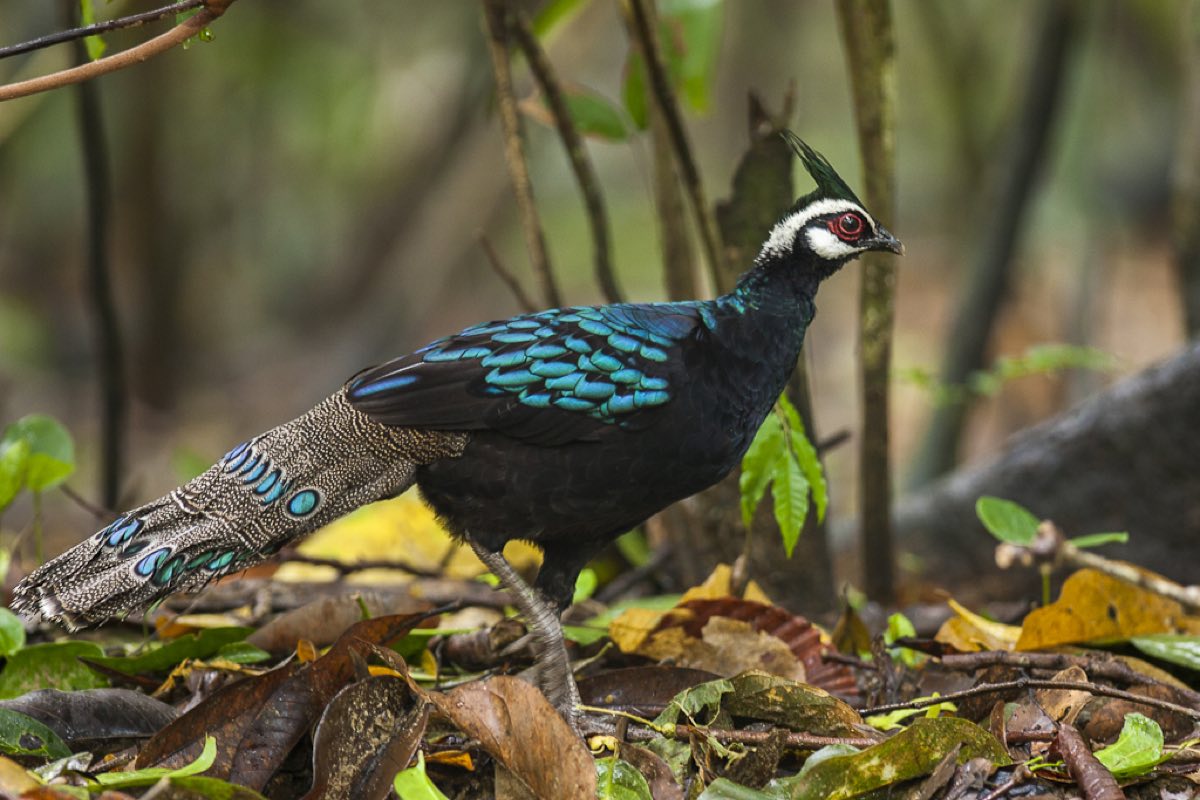
A small, honest, slightly tired half hour that some visitors love and some find uncomfortable. You get a modest butterfly dome, insect cases, a Palawan peacock-pheasant — the city's own emblem — and a bearcat, plus a resident Palaw'an family giving music, blowgun and craft demonstrations. It is in Sta. Monica, open 08:30 to 17:00, and takes 45 to 60 minutes. The entrance fee is ₱60 in one source and ₱100–150 in others — conflicting and unverified for 2026. It rates 4.3★. There is no pangolin exhibit, whatever a listing tells you.
A dome, a bearcat and a family
Set the scale correctly and this lands fine. Arrive expecting a serious butterfly house and it will not.
The butterfly dome is modest — a walk-through enclosure with local species, plus glass cases of beetles and stick insects that most children find better value than the butterflies. Alongside it are a Palawan peacock-pheasant, the endemic bird the city takes as its emblem and after which the September Tandikan Festival is named, and a bearcat, the Palawan binturong. Both are also at the wildlife rescue centre, in bigger enclosures.
The other half is the tribal village: a resident Palaw'an family giving demonstrations of music, blowgun use and craft-making, with handicrafts for sale. This is the part people come away talking about, in both directions. It is the most accessible encounter with an indigenous Palawan culture anywhere near the city, and it is a paid demonstration in a garden attraction, and both descriptions are accurate.
The whole thing takes 45 to 60 minutes. It appears on some city tour itineraries in place of another stop, so check before booking if it is the reason you are booking.
Three peoples, and how to think about the village
Three indigenous peoples are native to this area and its hinterland. They are living cultures with self-determination, not exhibits, and the difference shows in how you behave for the forty minutes you are there.
The Palaw'an, of south-central Palawan and split across four subgroups, are traditionally swidden farmers and blowgun and spear hunters — this is the group whose demonstrations you will see. The Tagbanwa, around 10,000 people across central and northern Palawan, are among the oldest peoples in the Philippines and one of the few retaining an indigenous syllabic script. The Batak, fewer than 500 people in the foothills north-east of the city at Tanabag, Concepcion and Langogan, are the smallest and most vulnerable — forest foragers of honey, almaciga resin and rattan, under real assimilation pressure. Any Batak-facing tourism must route through their own community structures, which means the Cleopatra's Needle trek registering at the Batak Cultural Community Center, not a roadside stop.
This site flags the judgement calls instead of making them for you: the crocodile farm is a genuine government breeding and rescue facility with small enclosures and a baby-crocodile photo op you can decline; the Butterfly Garden's Palaw'an demonstrations are paid, consensual and income-generating but read as zoo-adjacent to some visitors; and at Iwahig, inmates perform for tips. Buy the handicrafts, ask before photographing anyone, and skip anything that sits wrong with you.
The practical version: buy the crafts — that is the income, and it goes to the family in front of you rather than to a counter. Ask before you photograph anyone, and accept no as an answer. Do not film the demonstrations end to end. And if the dynamic sits badly with you once you are inside, leave early; nobody will mind, and it is a more honest response than sitting through it resentfully.
Every part of the visit, scored
Forty-five minutes, four parts. What each one is worth depends heavily on whether you have children with you.
| What | Notes | Time | Verdict |
|---|---|---|---|
| The Palaw'an demonstrations music, blowgun, craft-making | The reason to come and the reason some people don't. Paid, consensual and income-generating; also a performance for visitors. Buy the crafts | 20–30 min | DEPENDS |
| The insect cases beetles, stick insects | Consistently better value than the butterflies themselves, and the part children remember | 10 min | WORTH IT |
| The butterfly dome walk-through enclosure | Small. Butterfly enthusiasts will find it thin; nobody else will mind. Best in the morning when the insects are active | 10–15 min | DEPENDS |
| Palawan peacock-pheasant and bearcat the endemics | The peacock-pheasant is the city's emblem and the namesake of the September Tandikan Festival. Both are also at the rescue centre, in more space | 10 min | DEPENDS |
| A pangolin promised by some listings | There isn't one. No reviewer mentions one and no exhibit is confirmed. Palawan's endemic pangolin is trafficked at an estimated 26,800 animals a year and you will not see one here | — | SKIP |
The entrance fee is ₱60 in one source and ₱100–150 in others, unverified for 2026. Read the review record on TripAdvisor — it rates 4.3★.
Two different prices circulate, and neither is confirmed
Several entrance fees on the city-tour circuit are not published anywhere current — the crocodile farm (free in one source, about ₱40–50 in others), Plaza Cuartel, the Heritage Center and the Butterfly Garden all carry conflicting 2026 figures. Where that is the case this site gives the range and tells you to ask at the desk, rather than printing a number that will be wrong.
For this site specifically, one source gives ₱60 and others give ₱100–150. That is a spread of more than double on a stop that lasts under an hour, and nobody publishes an official 2026 rate. Carry ₱200 in cash per person and ask at the desk. If you are on a city tour, ask your operator whether the entrance is bundled, because on this stop it often is not.
Opening hours are the one reliable figure: 08:30 to 17:00, daily. Go in the morning — butterflies are active in warmth and light, and the family running the demonstrations is fresher before a day of coach parties.
The practical bit
Is it for you?
It is a tour stop more often than a destination
Sta. Monica is a ₱600–1,200 half-day tricycle charter away if you go independently, which is a lot for a 45-minute stop. Most people see it on the loop.
Butterfly Garden questions, answered
How much is the Palawan Butterfly Eco-Garden?
Sources conflict: one gives ₱60 and others give ₱100–150, with no official 2026 rate published anywhere. Bring ₱200 per person in cash and ask at the desk. If you are on a ₱600–900 city tour, check whether the entrance is bundled, because it often is not.
Is the Butterfly Garden worth it?
For 45 to 60 minutes with curious children, or as your only indigenous-culture touchpoint near the city, yes. It rates 4.3★. Butterfly enthusiasts will find the dome small and anyone uneasy about paid cultural demonstrations should skip it outright.
What are the opening hours?
08:30 to 17:00, daily. Go in the morning: butterflies need warmth and light to be active, and the Palaw'an family running the demonstrations is not yet three coach parties into the day.
Is the tribal village exploitative?
It is a judgement call this site will not make for you in a 45-minute visit. The resident Palaw'an family is paid, the demonstrations are consensual, and the handicraft sales are direct income — and it also reads as zoo-adjacent to plenty of visitors. Buy the crafts, ask before photographing, and leave early if it sits wrong.
Is there a pangolin at the Butterfly Garden?
No. No exhibit is confirmed and no reviewer mentions one. Palawan does have its own endemic pangolin, illegally hunted at an estimated 26,800 animals a year, but you will not see one in captivity in this city.
What animals are at the Butterfly Garden?
Local butterfly species in a small walk-through dome you will clear in 10 minutes, glass cases of beetles and stick insects, a Palawan peacock-pheasant — the city's emblem and the namesake of the September Tandikan Festival — and a bearcat, the Palawan binturong.
Where is the Butterfly Garden in Puerto Princesa?
Sta. Monica, on the northern side of the city near Baker's Hill and Mitra's Ranch. Independently it means a tricycle charter at ₱600–1,200 for a half day, which is why most visitors see it on the city tour instead.